









MBA in Software Engineering · USP/ESALQ
Deploy your career
Developed for those who want to design AI-Native, resilient, and scalable system architectures
84% of talent shortage in the IT sector in Brazil
ManpowerGroup — 2025 Talent Shortage SurveyUS$67.8bi revenue generated by the IT market in Brazil in 2025
ABES / IDC — Brazilian Software and Services Market 2025The token's price has dropped. But the bill has not.
60% of companies have already taken steps to combat excessive token consumption
Although token consumption has doubled, the problem is not the supplier, but rather knowing where to spend it.
Source: UBS Report and Gartner, 2026


Your knowledge has brought you this far. Now you are going to the next level.
Junior Developers are being replaced by AI. Build a solid foundation to validate what you already know how to do in practice, because the bar in the market only gets higher.

Dev → Tech Lead.Tech Lead → Staff Engineer.Staff Engineer → CTO.
Architecture, cloud, FinOps, Agent Orchestration, and Applied AI — with the USP certificate validating what you have already achieved.
This MBA is your career refactoring.
Our students work for the world’s largest companies and big techs.
This MBA is designed to turn developers into architects who design high-scalable systems and lead companies’ AI-Native transformation.
ONDE NOSSOS ALUNOS ATUAM:















From code implementer to architect:
the new role that companies are competing for.
While generative AI automates repetitive tasks, the market is opening up new opportunities for those who know how to orchestrate systems, architectures, and decisions — not for those who merely execute code. This MBA trains engineers that companies are competing to hire.
Understanding the basis of Software Engineering is essential.
Six subjects that explain what goes on behind the scenes — and how they can help you achieve better results at a lower cost.
01 · DEVOPS
Continuous integration and delivery, pipeline automation, versioning, and observability: from commit to traceable production.
How it helps you
Those who understand the pipeline know where AI can act and what to review before deploying. You ask for the right script, not a generic one.
02 · MICROSERVICES
Independent services, API contracts, asynchronous communication, and trade-offs between team autonomy and operational complexity.
How it helps you
Knowing how to define boundaries and contracts gives you the vocabulary to describe a service in just a few lines — and code that fits into the system.
03 · SERVERLESS
On-demand features, automatic scaling, and charging-per-execution. You understand when the model works and when it fails.
How it helps you
Understanding the meaning of abstraction helps you separate a vague prompt from a specific request: a well-described trigger, payload, and limit.
04 · CONTAINER ORCHESTRATION
Containers, Kubernetes orchestration, scaling, service discovery, and resilience: dozens of services available without manual effort.
How it helps you
Manifests are where AI gets things right quickly — if you know how to ask. Mastering the concepts allows you to validate the generated YAML in seconds.
05 · CLEAN ARCHITECTURE
Separation of responsibilities, dependency inversion, and isolation of business rules to survive a framework switch.
How it helps you
Well-defined layers have become small, testable tasks: less context per prompt, fewer tokens and answers you can check.
06 · DOMAIN-DRIVEN DESIGN
Domain-oriented modeling: ubiquitous language, bounded and aggregate contexts. Complex business rules in readable code.
How it helps you
Ubiquitous language is context-based engineering: using accurate terms, AI stops making assumptions and the output comes close to what the business requires.
PROFESSIONAL POSITIONING
From technical executor to sought-after leader.
Before
Technical executor vulnerable to the automation of repetitive tasks.
After
A technology strategist and technical leader, highly sought after in the market for making high-impact decisions.
When working for international companies, you earn, on average, a salary that is 3.6 times higher than at a local company.
NaGringa.dev - 2026
Same work. Same dev. A much larger market.
Remote work has become the norm. But earning in dollars while working remotely is a privilege reserved for those who solve complex problems.

The only MBA that takes your vision from coder to system architect.
Master the key concepts with those who face the challenges posed by the world’s big tech companies.
A course load that goes beyond prompts
- 01Service Containerization (Docker)
- 02Frontend Development
- 03Backend Development
Learn from those who design the most important systems in Brazil and around the world.

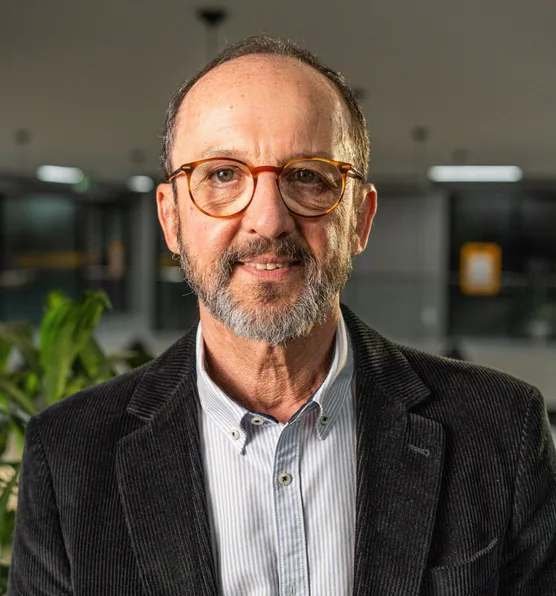
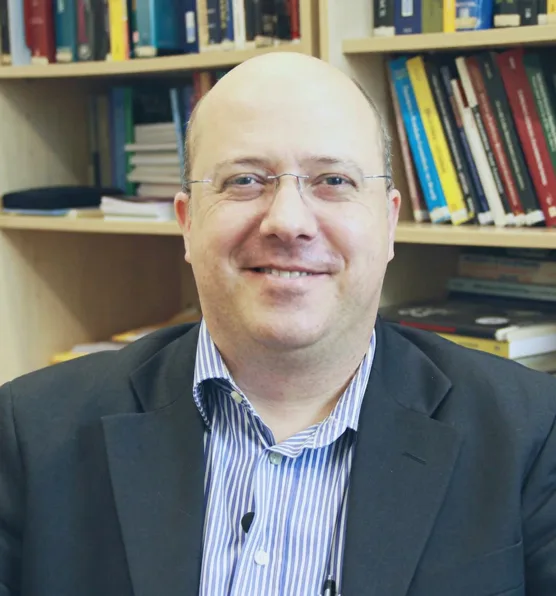
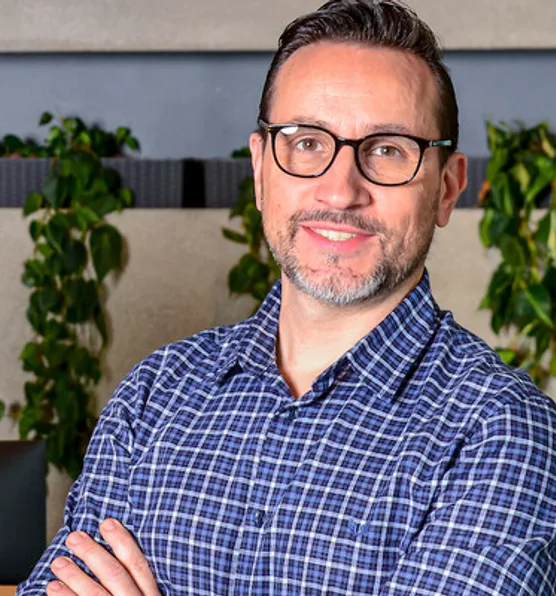
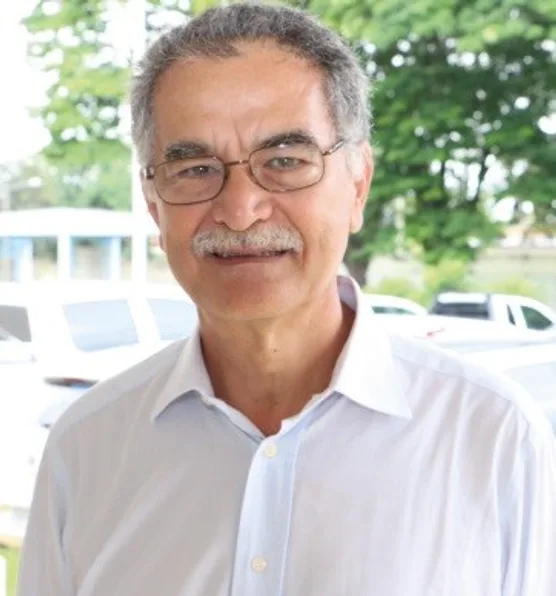


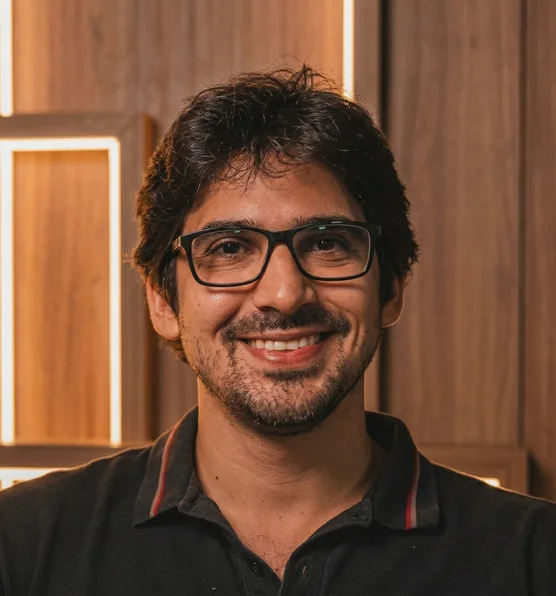

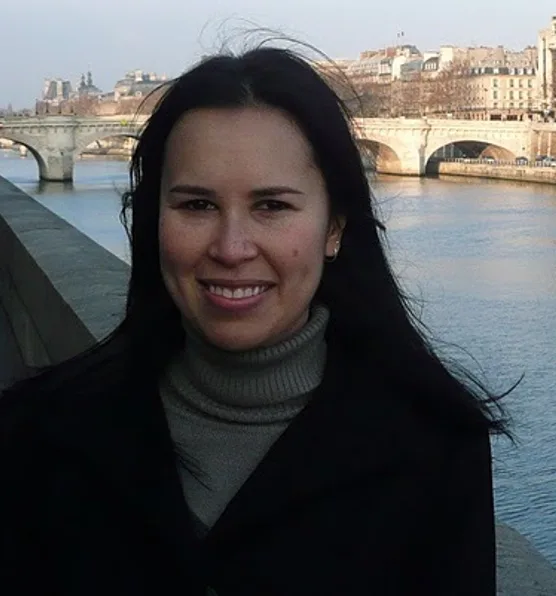
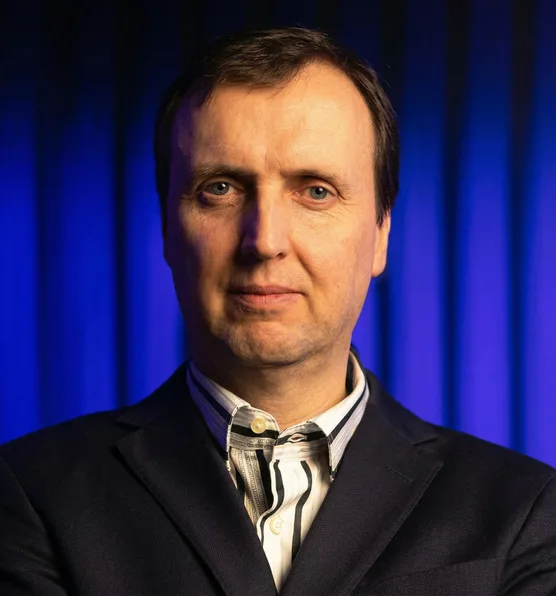

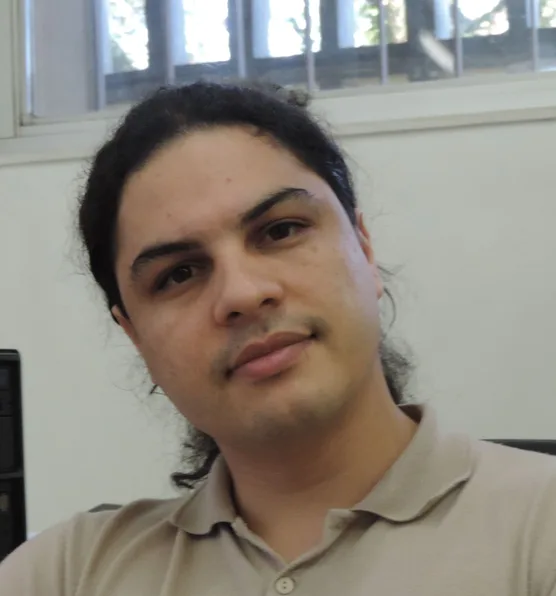




Our professors work at the world’s biggest big techs and at Latin America’s biggest university.
> Student testimonials
The class format, course content, and professors with extensive market knowledge have made a big difference.
Reginei L. de L.
Manager
So far, I can say that choosing this MBA was the best decision I've made in every way — classes, course format, content, system, etc.
Jader A. F. da C.
Supervisor
I'm enjoying the live classes; I can ask questions whenever I want. All classes have the necessary documents. And the tests are based on past content. Professors convey information clearly, demonstrating their mastery of the subject.
Thais F. P.
Analyst
I am enjoying it! I have already taken the MBA in Data Science, and the course format meets my needs.
David Francisco
Assistant
It has been an enriching journey! Although it is an online course, the MBA has an active virtual community of students who organize gatherings, celebrations, debates, and more, both online and in person.
Anderson M. da S. M.
Student
This MBA is an academic investment that pays for itself in about 4 months
Course ROI
A professional who advances to the position of Senior Developer or Specialist recoups the cost of the MBA in about 4 months.
SalaryHigh demand
Senior Dev
~BRL 15,635/month
SalaryCritical
Specialist
~BRL 19,290/month
The USP certificate strengthens this progression in selection processes.
Source: Código Fonte TV 2025 and Robert Half 2026
Artificial Intelligence has made lines of code cheaper. And Software Architects are becoming increasingly valuable.
- Start date: 15/10/2026
- USP Certificate
- 7-day guarantee
- Secure payment via boleto (only for Brazilians) or credit card
National Plan
Remote live
Up to 22 installments of
BRL 597/month
Total BRL 13,134.00 + application fee*
I WANT TO APPLY- Live, recorded, and subtitled classes
- Online tests
- Chat interaction with the class
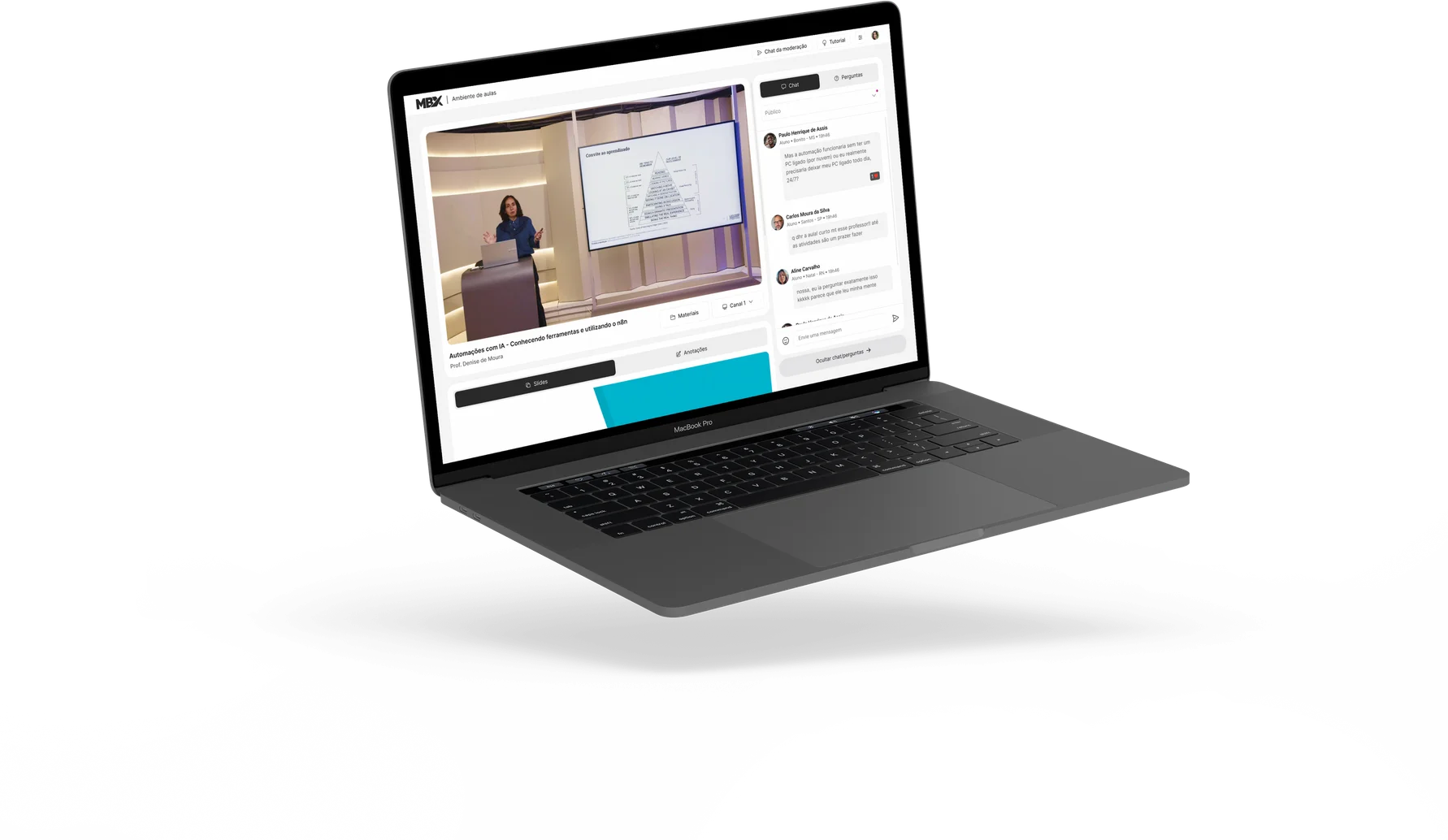
- Access to the MBX app
- Service, academic advising, development, and presentation of the Business Case in Brazilian Portuguese
- Service, academic advising, development, and presentation of the Business Case in English and Spanish
- Translated materials, tests, and Course Documents
- International shipment of the gift
- Apostille certificate (Hague)
International Plan
Remote live
Up to 22 installments of
BRL 755.92/month
Total BRL 16,630.32 + application fee*
I WANT TO APPLY- Live, recorded, and subtitled classes
- Online tests
- Chat interaction with the class
- Access to the MBX app
- Service, academic advising, development, and presentation of the Business Case in Brazilian Portuguese
- Service, academic advising, development, and presentation of the Business Case in English and Spanish
- Translated materials, tests, and Course Documents
- International shipment of the gift
- Apostille certificate (Hague)
FAQ.md
The MBA in Software Engineering is a USP-certified graduate course in software engineering designed for professionals who want to deepen their technical skills and expand their ability to lead engineering efforts. The course combines synchronous and asynchronous content, applied workshops, and a final project focused on having a direct impact on the market.
This specialization is ideal for different profiles:
- Professionals in the field: software engineers, developers, and technology experts who seek to strengthen their foundation in software engineering and advance to strategic positions (such as tech lead and engineering manager).
- Leaders and Executives: Coordinators, managers, and C-levels who want to expand their technical repertoire in system design, architecture, and innovation.
- Career transition: people who work on related projects or who want to migrate to the IT market with a fundamental understanding of modern development.
Not necessarily.
The MBA accepts students with different levels of programming experience. For professionals who are not yet familiar with software development, the course offers an introductory leveling module.
This module helps students develop an important foundation before moving on to more technical MBA content.
Yes. The MBA in Software Engineering is highly sought after by professionals who wish to transition into the technology field or who need to work more closely with modern systems engineering. The course accelerates this transition journey through practical, applied training that is fully aligned with the hiring demands of the market.
Many of the classes will have a practical approach that will allow students to develop software, using methodologies and tools widely accepted in the market.
In addition, planning, analysis, design, implementation, and software testing activities will be carried out during these classes, using programming languages, frameworks, libraries, and other relevant technologies.
The course prioritizes open source technologies widely used by the market, highlighting the following:
- JavaScript;
- Python.
Other tools, frameworks, and relevant technologies can also be used throughout the subjects and examples presented by professors.
Yes.
The course understands Artificial Intelligence as an important tool for enhancing the work of modern software engineers.
The MBA has specific subjects related to the use of AI and it incorporates Artificial Intelligence as part of the development process throughout the course, always considering good practices and real applications.
Yes.
Software architecture is one of the key topics in the MBA course, along with content related to:
- Cloud computing;
- DevOps;
- Scalability;
- Modern applications;
- Software development in real environments.
The goal is to train professionals capable of working on both small-scale applications and systems that require large-scale implementation and greater technical complexity.
The MBA will address technical, strategic, and management content. The goal will be to prepare professionals with hard skills who are able to make decisions through a wide repertoire of knowledge related to software engineering.
Yes.
Even with live classes, students also have access to the recordings until the end of the MBA, offering more flexibility to stay up to date with the content.
Yes.
Live classes allow interaction between students and professors, promoting the exchange of experiences and networking between professionals from different fields, companies, and experience levels.
Compensation varies according to job title, experience, location, and size of the company. Those who advance to technical leadership roles, such as tech lead and engineering manager, typically earn higher salaries than those at the technical level, since they become responsible for teams and results.
Taking the MBA USP/Esalq in Software Engineering will likely broaden your range of opportunities and increase your earning potential.
Classes are held live, allowing for direct interaction with professors and the opportunity to ask questions.
In addition, classes are recorded and remain available until the end of the course, allowing students to organize their routine and review the content whenever they want.
Attendance in the MBA in Software Engineering is calculated through online tests taken after each subject, requiring a minimum grade of 75%.
Each multiple-choice test has 10 questions and remains available in the system for three weeks. Three attempts are allowed, and the highest grade obtained is the one considered. Students must achieve a grade average equal to or greater than 7 to be approved.
At the end of the course, the mandatory final tests are taken.
The final project of the MBA in Software Engineering is a Business Case. The goal is to have students apply the knowledge they have acquired to solve a real technical or business problem from their daily professional lives.
The entire process is 100% online, including the advising and the final presentation made via video conference to an examining board from USP/Esalq.
The MBA in Software Engineering faculty combines the best of two worlds: the renowned academic excellence of University of São Paulo professors with the practical knowledge of experts working in the corporate market.
Classes are taught by professionals who design solutions, CI/CD pipelines, and scalable architectures on a daily basis at global Big Techs (such as Google, Amazon, and Microsoft), bringing real-world trade-offs into the classroom.
Yes.
Upon successfully completing the MBA in Software Engineering, you will receive the official digital certificate of specialization issued by USP/Esalq, adding the seal of the country’s largest university to your resume.
The course meets all legal requirements, being fully accredited, authorized, and recognized by MEC for its distance learning graduate courses.
Choose courses that offer faculty with practical experience, applied activities (labs and real projects), testing based on deliverables, and connections to the market.
The MBA USP/Esalq in Software Engineering was structured to suit different backgrounds, and aims to combine:
- Practical learning;
- Current market technologies;
- Artificial Intelligence applied to development;
- Software Architecture;
- Cloud and DevOps;
- Technical Leadership;
- Networking;
- USP professors with theoretical excellence and professionals who work in solving problems in Big Techs companies such as Amazon, Microsoft, Google, etc.
In addition, the course combines live classes, constant interaction, and training focused on real and scalable applications.
For more questions about the MBA USP/Esalq, access our FAQ.
Do you need more information?
Click here and ask your questions!


Dog personCat person
Stop coding. Architect your future.
Questions? +55 (19) 2660-3343 ·
info@mbauspesalq.com